CJC-1295 without DAC — also known as Mod-GRF 1-29 — is one of the most widely referenced GHRH analogues in growth-hormone secretagogue research, yet most Indian sourcing guides only mention it in passing. This is a dedicated deep-dive: what the compound is, how it differs from the DAC version, where it turns up in the literature, what it costs across every size, and how to source a properly documented batch.
- CJC-1295 (without DAC) is a 29-amino-acid analogue of growth-hormone-releasing hormone (GHRH), also called Mod-GRF 1-29.
- Unlike the DAC version, it has a short half-life — the reason it's the preferred reference compound for pulsatile-release research models.
- At OMNIPOTENT it's HPLC ≥99% pure with a batch COA, from ₹6,999, with a 10 mg size and a pre-mixed Ipamorelin blend.
- Most frequently studied alongside Ipamorelin and GHRP-6 in GH-axis literature.
What is CJC-1295 (without DAC) / Mod-GRF 1-29?
CJC-1295 (without DAC) is a synthetic analogue of the first 29 amino acids of growth-hormone-releasing hormone (GHRH) — which is exactly why it's also called Mod-GRF 1-29 in older research literature. The "without DAC" label distinguishes it from a second, longer-acting version of CJC-1295 that carries a Drug Affinity Complex (DAC) tag. Both are GHRH-axis compounds, but they behave very differently once introduced into a research system, which is the whole reason the distinction matters to anyone reading a paper or protocol that references "CJC-1295."
CJC-1295 without DAC vs CJC-1295 with DAC
The DAC modification binds the peptide to serum albumin, dramatically extending its half-life in circulating research models — that's the version associated with sustained, low-amplitude elevation. Mod-GRF 1-29 (the without-DAC form OMNIPOTENT supplies) has a half-life measured in minutes rather than days. That short window is precisely why it's the compound of choice in research designed around a single, sharp pulse rather than a flattened, continuous one — it mimics the body's own pulsatile GHRH release far more closely than the DAC variant does. If your reading list references "pulsatile GHRH stimulation" specifically, it's almost certainly the without-DAC form being discussed.
Where CJC-1295 (without DAC) appears in research
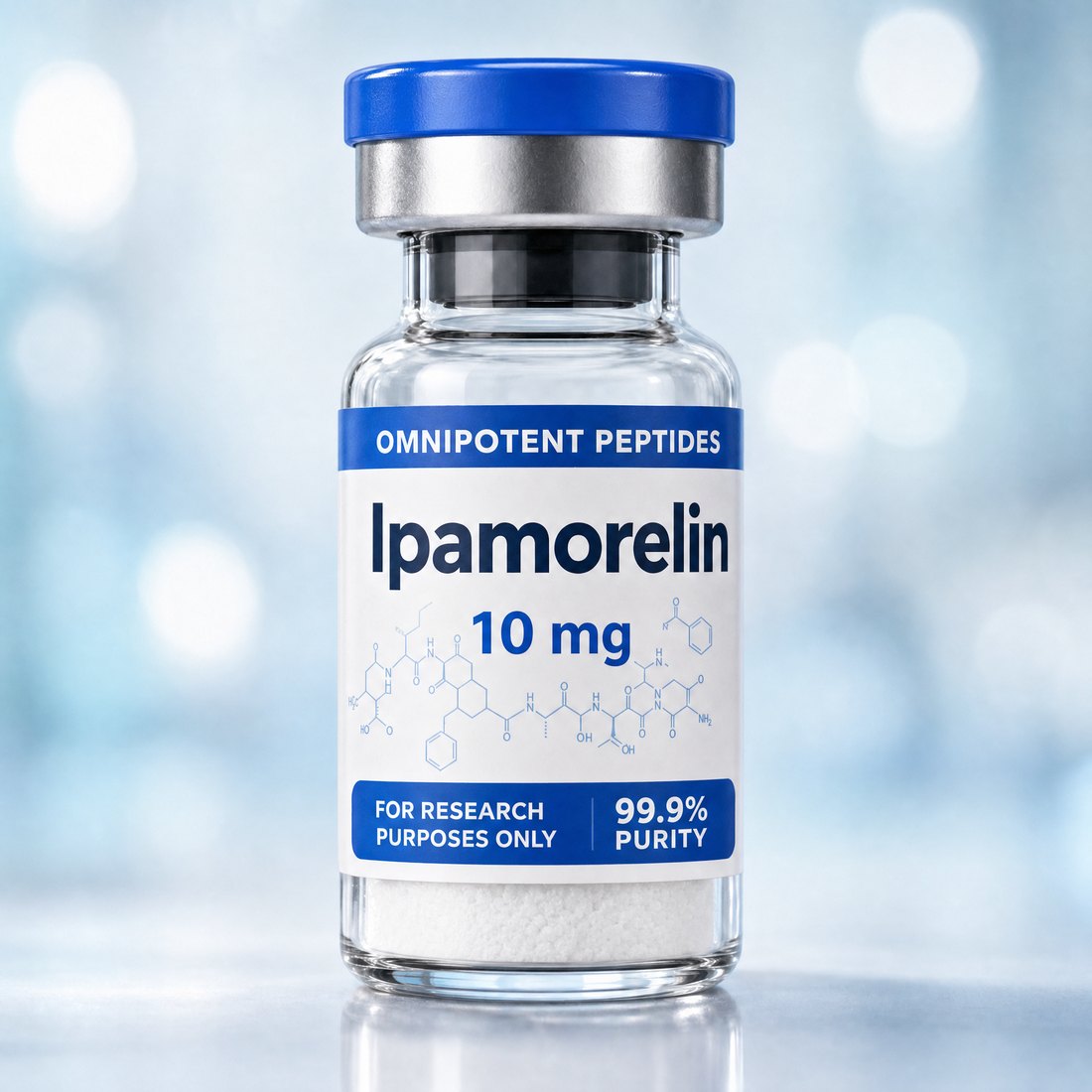
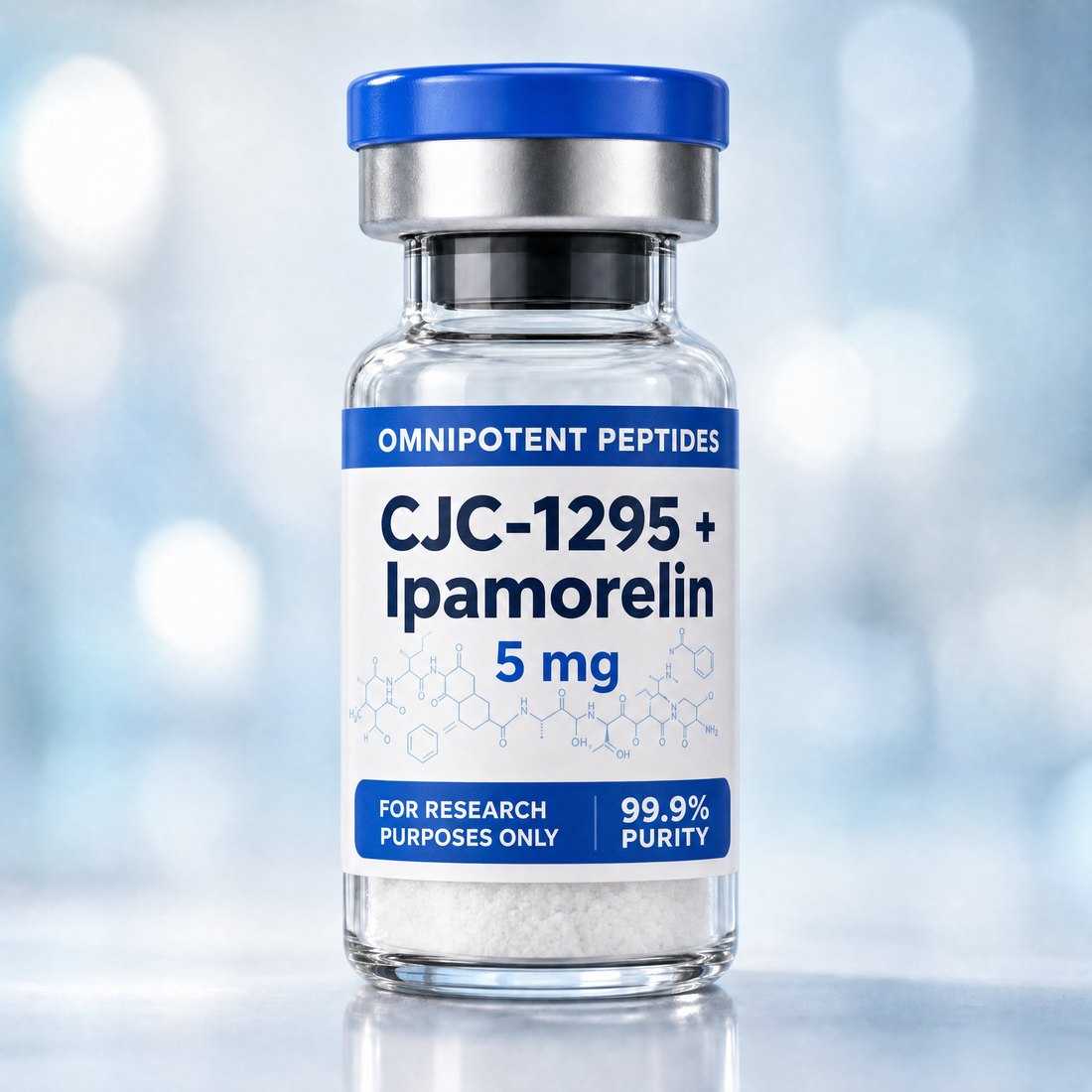
Mod-GRF 1-29 rarely shows up alone in the literature — it's consistently referenced alongside a ghrelin-receptor agonist, most often Ipamorelin or GHRP-6. The logic is straightforward: GHRH and ghrelin-mimetics act on two separate receptor pathways that both converge on growth-hormone release, so studying them together produces a more complete picture of the axis than either compound alone. This is also why the pairing is popular enough that OMNIPOTENT offers a ready-made CJC-1295 + Ipamorelin pre-mixed blend for researchers who don't want to prepare two vials separately. We've written a full comparison of the pairing in our CJC-1295 + Ipamorelin research guide if you want the combination explained in more depth than this single-compound article covers.
CJC-1295 (without DAC) price in India
At OMNIPOTENT, CJC-1295 (without DAC) / Mod-GRF 1-29 starts at ₹6,999 for a 5 mg vial, HPLC ≥99% pure with a COA. Larger sizes and a bacteriostatic-water bundle are available on the product page:
| 5 mg | ₹6,999 |
| 5 mg + 10 ml BAC water | ₹7,999 |
| 10 mg | ₹12,099 |
| 10 mg + 10 ml BAC water | ₹13,199 |
| CJC-1295 + Ipamorelin pre-mixed blend | ₹10,499 |
As with any specialised GHRH-axis compound, the price reflects verified identity, batch purity and the cost of proper cold-chain lyophilisation — not just the raw peptide weight.
Reconstitution, storage & handling
CJC-1295 (without DAC) ships as a lyophilised powder in a sealed vial. For laboratory handling it's reconstituted with bacteriostatic water and kept refrigerated once mixed, protected from light and repeated freeze-thaw cycles. Our step-by-step reconstitution guide walks through the process in detail, and our coaches are available after every order to answer handling questions.
How to verify purity before you buy
Because Mod-GRF 1-29 is a shorter, more delicate peptide chain than some other GHRH analogues, purity verification matters even more here. Always ask for a batch-specific Certificate of Analysis rather than a generic one, and confirm the HPLC purity figure directly against the vial you're being sent — our guide to verifying peptide purity and COAs covers exactly what to check. If you're sourcing your first research peptide altogether, our broader buyer's guide to research peptides in India covers the five checks that matter for any compound, not just this one.
Choosing between CJC-1295 (without DAC) and other GHRH analogues
Researchers comparing GHRH-axis compounds often ask why they'd select Mod-GRF 1-29 over a longer-acting alternative like Tesamorelin or the DAC form of CJC-1295. The answer usually comes down to the specific research question being asked. If a study design calls for mimicking the body's natural pulsatile GHRH release — short bursts followed by a return to baseline — the without-DAC form is the closer analogue, because its rapid clearance prevents sustained receptor occupancy. Longer-acting analogues are better suited to research questions about sustained elevation rather than pulse dynamics. This is also why Mod-GRF 1-29 is so consistently paired with a ghrelin-receptor agonist in published protocols: a short-acting GHRH pulse combined with a ghrelin-mimetic pulse more closely approximates the two-pathway physiology researchers are trying to model. For a deeper look at that pairing specifically, see our CJC-1295 + Ipamorelin guide, or compare the GHRH-axis approach against a different analogue entirely in our Tesamorelin research guide.
Because Mod-GRF 1-29 is a 29-residue chain, sequence fidelity is harder to maintain during synthesis than with shorter peptides — a single truncated or missing residue can meaningfully change how a batch behaves in a research model. That's why OMNIPOTENT batches are HPLC-tested to ≥99% purity as standard, with mass-spec identity confirmation available on request for researchers who need it documented for a lab record.
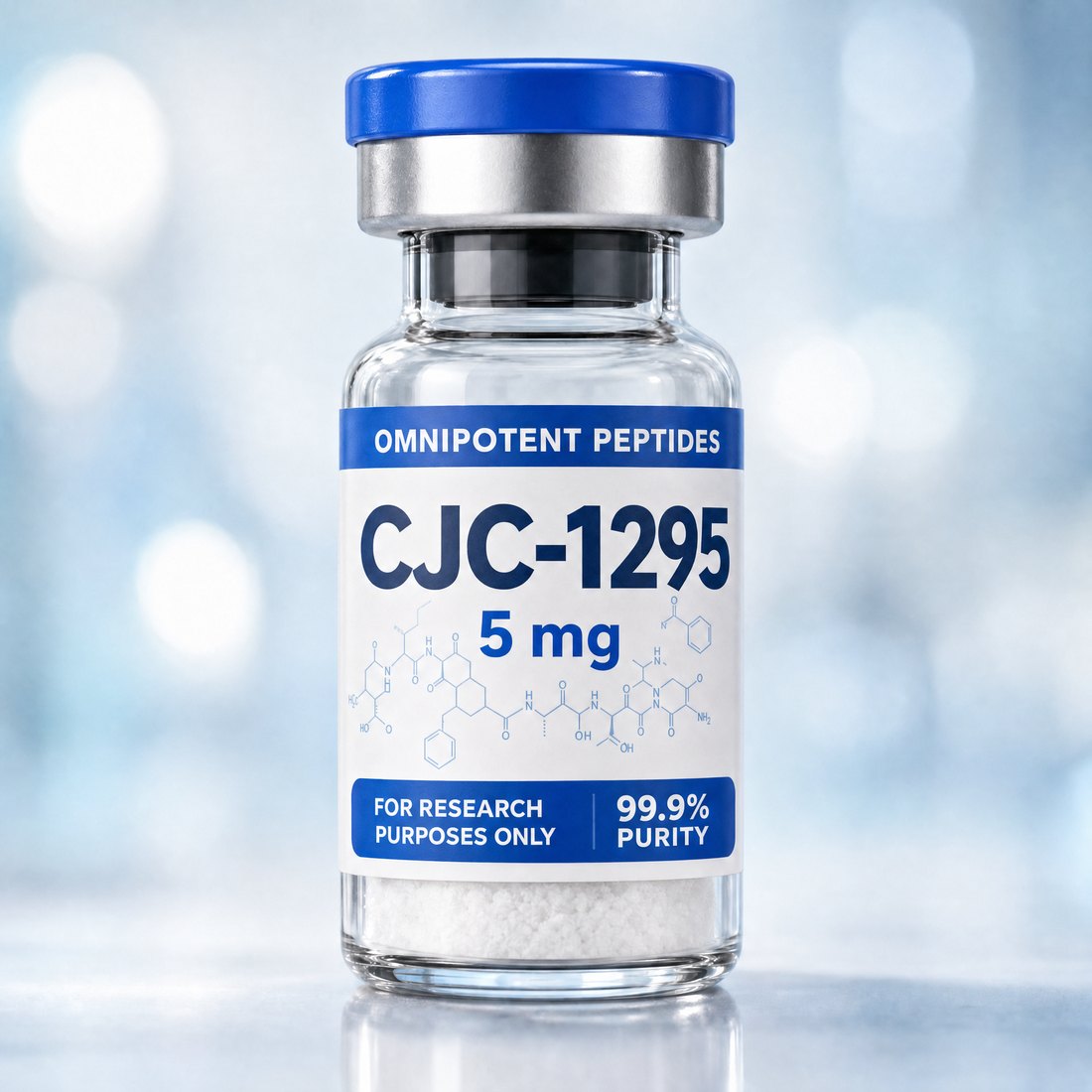
CJC-1295 (without DAC) / Mod-GRF 1-29
GHRH(1-29) research analogue, HPLC ≥99% with a batch COA. Free coach guidance, fast pan-India delivery.
Frequently asked questions
What is CJC-1295 (without DAC) used for in research?
CJC-1295 without DAC, also called Mod-GRF 1-29, is a GHRH(1-29) analogue studied in growth-hormone-axis research. It is supplied strictly as a reference compound for in-vitro laboratory research.
How is CJC-1295 without DAC different from CJC-1295 with DAC?
The DAC (Drug Affinity Complex) version is modified for a longer half-life, while the without-DAC form (Mod-GRF 1-29) clears faster and is more often referenced in pulsatile-release research models. OMNIPOTENT supplies the without-DAC form.
How much does CJC-1295 (without DAC) cost in India?
CJC-1295 (without DAC) / Mod-GRF 1-29 starts at ₹6,999 at OMNIPOTENT, HPLC ≥99% pure with a batch COA. A 10 mg size and a pre-mixed CJC-1295 + Ipamorelin blend are also available.
Is CJC-1295 without DAC studied together with Ipamorelin?
Yes — it is one of the most-referenced GHRH/GHRP pairings in secretagogue research literature, and is available as a pre-mixed blend for convenience.
Do you provide a COA?
Yes, every CJC-1295 (without DAC) batch ships with a Certificate of Analysis confirming HPLC ≥99% purity.
⚠️ Research use only. All products referenced are supplied strictly as laboratory research chemicals / reference materials — not for human or veterinary use, not drugs, and not for diagnostic or therapeutic purposes. Nothing here is medical advice.